What Matters Most: Finding Our Way Through Uncertainty
On love, curiosity, and the conversations that shape our care.
I’ve been quiet here for a while, and I’m emerging with an evolution in my work that I feel called to share.
Over the past few years, I found myself navigating challenges I didn’t feel prepared for. I’ve spent most of my nursing career filling a toolbox with ways to ease distress: physical, emotional, and spiritual. I thought I could stay ahead of the wave.
Turns out I couldn’t.
I’m finally back above water, in a place some might call post-traumatic growth. I can talk about what happened with some distance now, and share insights I believe could only be found in the depths.
But this is really the story of what carried me back to shore, and what I discovered when I found myself on the receiving end of the care I had always tried to give.
A decision made with love, in uncertainty
In an emergency room, we faced a decision about whether to continue life-saving measures for my dad. There was little time, no certainty, and no one in the room who really knew who he was, who we were, or what mattered most to us.
The decision haunted me for years. Wondering whether we had done the right thing. Wondering what might have been different.
I now understand what I couldn’t see then: we made that decision without knowing all the possible futures, but we made it with so much love.
I wish we had been better prepared to bring what mattered most to us into that room.
The unexpected medicine of presence and curiosity
A few weeks after losing my dad, I attended the NTI nursing conference to present. I almost backed out. Rushing between sessions, I noticed people with words written on their skin in Sharpie. Before I knew it, a new friend was writing three words on my skin.
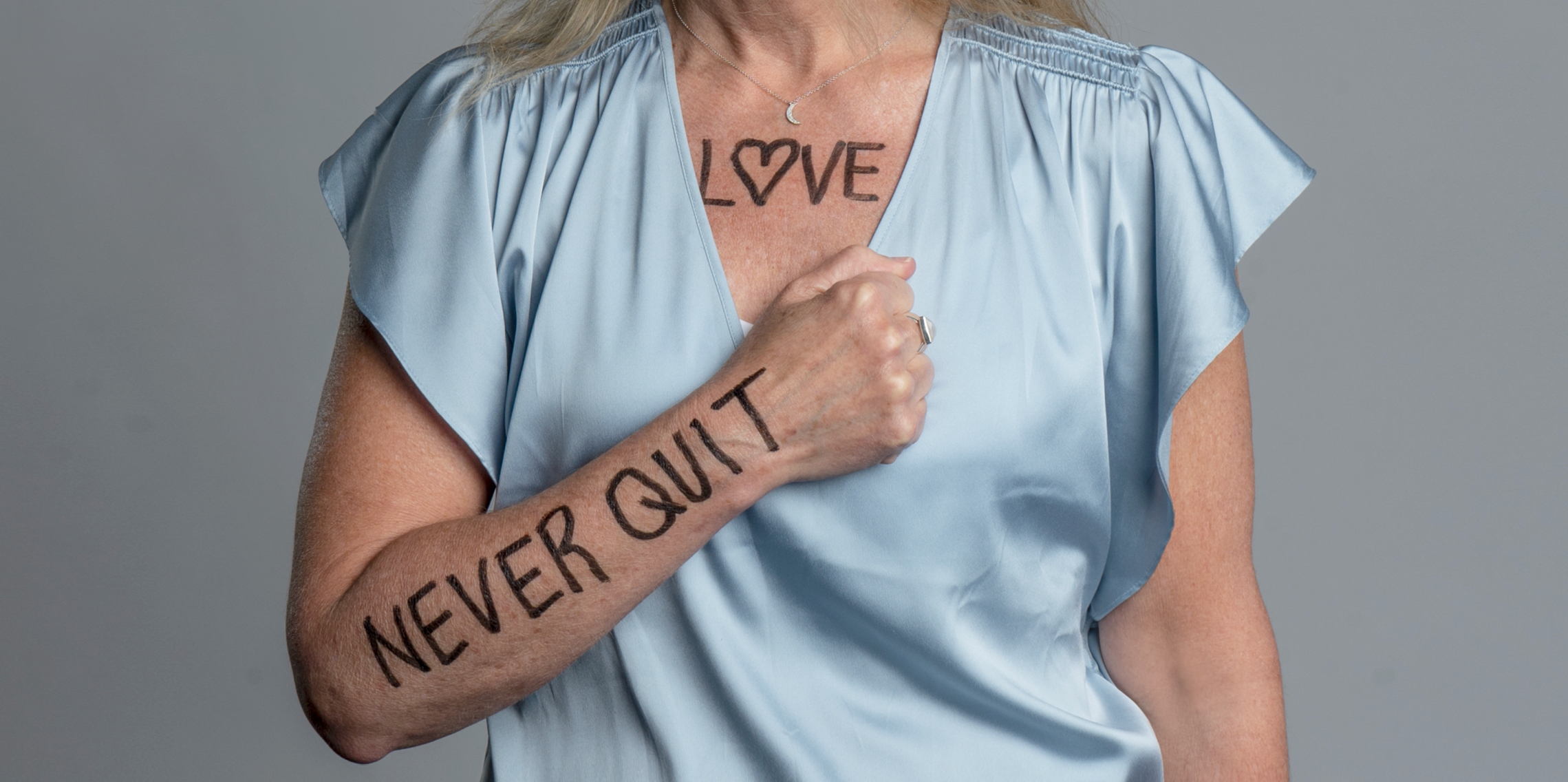
Those words held a story about my dad. And they led me into a dark room with bright lights, where a compassionate videographer invited me to tell him more.
I wasn’t expecting what happened next.
Through the experience created by Dear World, I rediscovered what mattered most. I felt truly seen in one of my most vulnerable moments. Not fixed. Not interpreted. Just met with presence and curiosity, and enough care to let my story unfold.
And in telling it, my heart began to heal.
Dear World couldn’t change what happened, but they helped me begin to see that uncertainty about the decision didn’t have to mean uncertainty about the love behind it.
Thank you, Dear World, for reminding me what becomes possible when someone makes room for our story.
If you’d like to hear more of my dad’s story, you can find it here. You’ll also find the Dear World video at the bottom of the page.
Two familiar practices, new meaning
Presence and curiosity became the two practices I valued most as I found my way forward.
I was first introduced to the power of cultivating curiosity in the wellbeing space years earlier, through a conference talk by psychologist Todd Kashdan about curiosity as a missing ingredient for a fulfilling and adaptable life. And throughout my nursing career, many teachers had reminded me that a caring presence was everything.
Experiencing both through Dear World gave these familiar practices new meaning.
In healthcare, these practices matter more than we often realize.
We can’t always know how an illness will unfold or which decision will bring the outcome we hope for. But we can become clearer about what we value, what we hope for, what concerns us, and how to speak up for what is important.
When uncertainty is in the room, our values can help us find our way
Dr. Macey Levan captures this beautifully in her TEDx talk, Rethinking Medical Decisions Beyond Outcomes. She shares her own experience navigating a difficult decision and explores what it means to choose from love rather than fear, particularly when no outcome can be guaranteed.
Knowing what matters most doesn’t remove uncertainty, but it gives us something steady to stand on.

From my story to the work
My desire to heal, along with a growing hope that some part of my experience might help change how we care for others, led me to the University of Washington’s graduate program in palliative care. As a nurse and nationally board-certified health and wellness coach, whole-person care wasn’t new to me. But the program offered new perspectives and practical skills for exploring values, hopes, concerns, and goals of care, especially when outcomes are uncertain.
Throughout the program, I found myself reflecting on my dad’s experience and the conversations that might have helped us navigate difficult moments.
The curriculum invited us to develop a passion project. It was an opportunity to bring together what I was learning with my experience in nursing, integrative health, and behavior change coaching, and imagine how these conversations might begin much earlier.
From that work, the Replenish Care Plan Journey took shape.
The Journey is a structured approach to whole-person supportive care planning. It creates space for people to tell their stories, explore their health experiences, identify what matters most, and consider their hopes, concerns, and priorities for the future. These conversations help create a living, values-aligned care plan that can travel with them, inform conversations with clinicians and loved ones, and guide decisions as their health changes over time.
But knowing what matters most is only part of the work.
We also need to find the words and confidence to bring those values into conversations where they might otherwise remain unheard.
I’ve built the process with the same foundational practices that carried me back to shore: presence to stay with what is, and curiosity to uncover what hasn’t yet been said.
My hope is to help people discover and communicate what matters most, so that when difficult decisions come, as they did for Macey and for my family, they can approach them with greater clarity and trust in the values guiding their choices.
Making room for what matters
Tomorrow, October 10, is World Hospice and Palliative Care Day, a meaningful moment to honor the belief that palliative care principles shouldn’t be reserved for the end of life.
We can begin with ourselves:
What matters most to me in this moment?
What would I want my care team to know about me?
In honor of my dad, I’m sharing a short restorative practice he loved. It’s a simple way to practice presence. Close your eyes, rest for a moment, and simply be.
Listen: Pacing the Heart
My dad taught me so much about the value of time. Dear World helped me recognize the love that filled it. I am forever grateful.
My invitation: Make room for your story. Get curious about what matters most. You never know when those words may help you find your way.
If this work resonates and you’d like to explore it together, I’d love to connect. For organization focused on clinician wellbeing, Replenish at Work remains available, because the people offering this kind of presence need care too.